Vampire Cops and 90s Trauma: Why Nick Knight is All of Us
Hello my fellow survivors of the "Be Kind, Rewind" era. We need to talk about Nick Knight! I recently re-watched the second episode of Forever Knight, "Dark Knight: The Second Chapter", and it hit me harder than a realization that I now have a favorite brand of digestive enzyme.
Back in ’92, we thought a vampire working the graveyard shift in Toronto was the peak of edgy. Now? A guy who hasn't slept since the French Revolution, hates his boss, and is desperately trying to "rebrand" himself despite his problematic past is basically just every Xennial on LinkedIn trying to pivot into tech.
Grab your Zima (or your Lipitor, let’s be real) and let’s dissect why this episode is a time capsule of our collective professional anxiety.
1. The Eternal Intern: When Your Career Path is a Flat Circle
In this episode, Nick is still grappling with the fact that he’s a cop who can’t go out in the sun. It’s the ultimate "work-life balance" nightmare. In the 90s, we were promised that if we worked hard, we’d climb the ladder. Nick has been alive for eight centuries and he’s still a detective. That’s the equivalent of being a "Senior Associate" for 400 years.
From a sociological perspective, Nick represents the Stalled Mobility our generation feels. We entered the workforce during the "End of History" optimism, only to realize the ladder was actually a treadmill. Nick’s struggle to be mortal — to join the mainstream workforce and be "normal" — is just a 13th-century version of us trying to understand TikTok marketing.
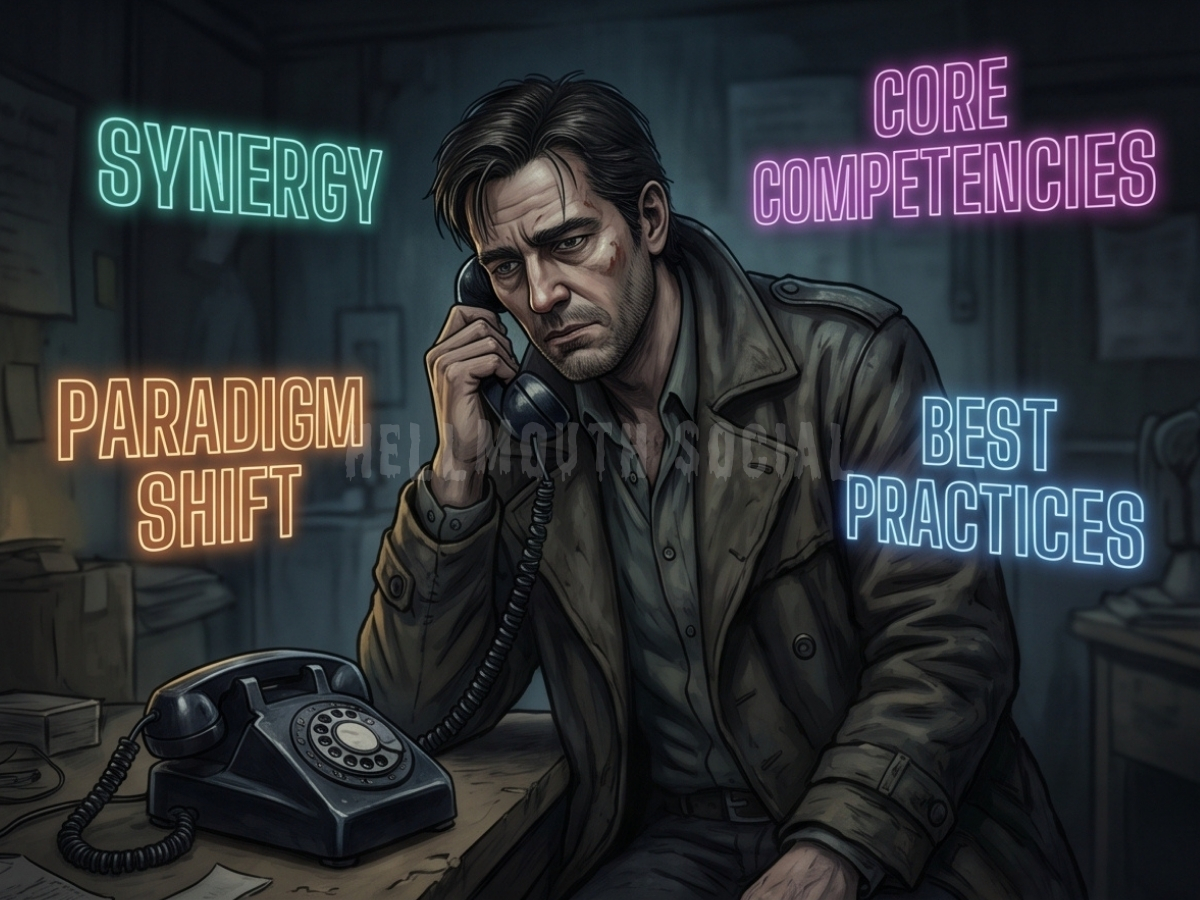
He’s trying to unlearn his vampire nature which is really just a metaphor for us trying to unlearn the "hustle culture" we were fed alongside our SnackWells cookies. He wants to be a good man but his toxic ex-mentor, Lacroix, keeps calling him on the psychic equivalent of a burner phone to remind him he’s actually a monster. We’ve all had that boss.
You know the one — the one who emails you at 9:00 PM on a Saturday to ask if you’ve "checked the metrics". Lacroix is just a middle manager with better cheekbones and a bloodlust.
2. The Original 'Remote Work' Struggle (Without the Sweatpants)
The theme of "The Second Chapter" is heavily focused on Nick trying to fit into a system that wasn't built for him. He’s operating in a pre-digital forensics world where he has to rely on his heightened senses. Today, we call that "emotional intelligence" or "reading the room", but in 1992, it just meant he looked really intense while smelling a suspect’s sweater.
Sociologically, this episode highlights the Individual vs. Institution conflict. Nick wants to use his unique "skill set" (being an undead killing machine) for the greater good (solving murders in Ontario). But the institution — the police force — demands conformity.
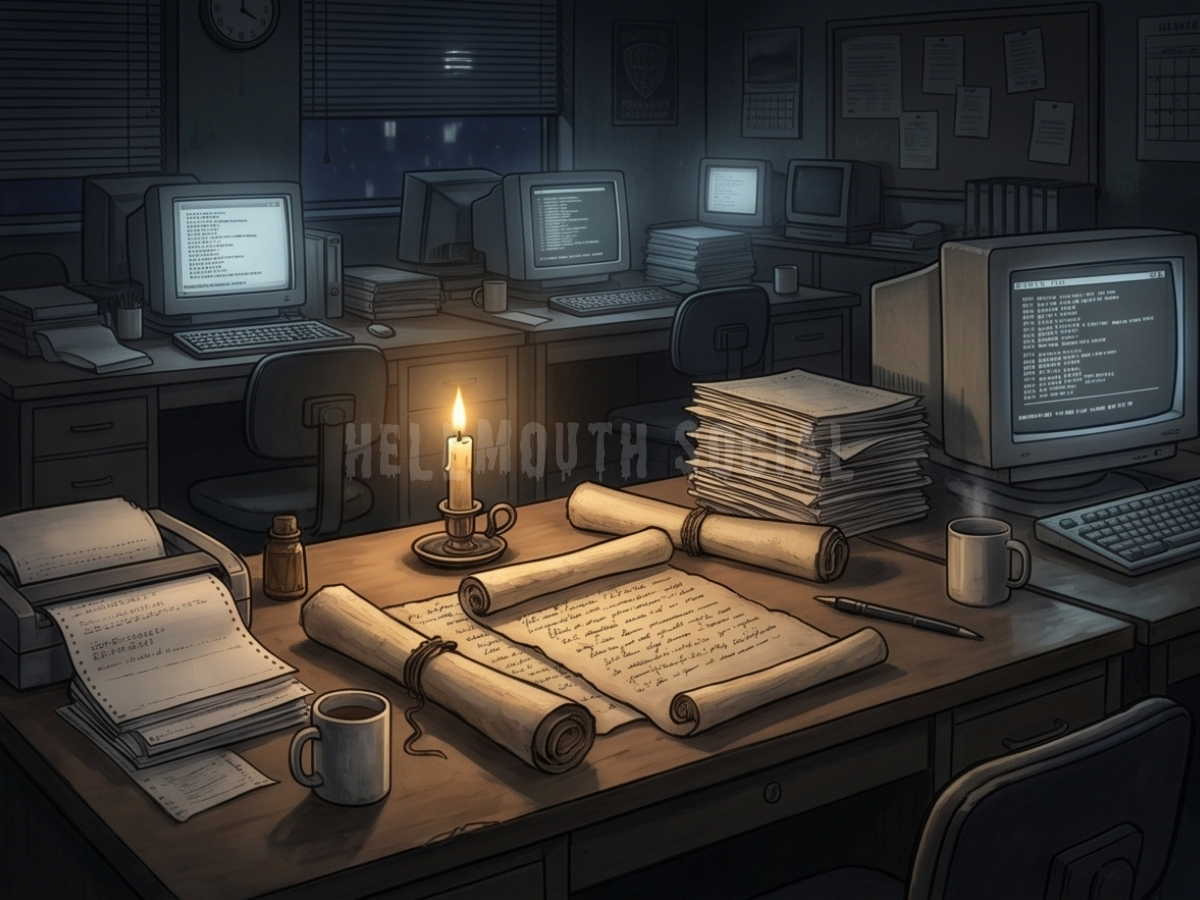
As Xennials, we are the Bridge Generation. We remember life before the internet, but we’re tech-savvy enough to fix our parents' Wi-Fi. We are the Nick Knights of the modern office. We’re the ones saying, "Hey, maybe we don't need a Zoom meeting for this", while the Gen Z interns are filming "Day in the Life" vlogs in the breakroom and the Boomer partners are still trying to figure out how to un-mute themselves.
We are perpetually "in-between", belonging to two worlds and fully comfortable in neither. Nick’s Cadillac is his fortress of solitude; our 2018 SUVs are where we sit in the driveway for ten minutes of silence before going inside to face the chaos.
3. Blood Lust vs. Social Lust: The Agony of the Rebrand
The core of this episode is Nick’s relationship with Natalie, the medical examiner who knows his secret. She’s basically his therapist, his doctor, and his only link to humanity. In the 90s, this was "sexual tension". In 2026, we recognize this as Emotional Labor. Natalie is doing a massive amount of heavy lifting to keep Nick from eating the witnesses.
This mirrors the sociological shift in how we view relationships today. Back then, we thought "I can fix him" was a romantic plot point. Now, we realize Nick needs a 12-step program and a heavy dose of shadow work.
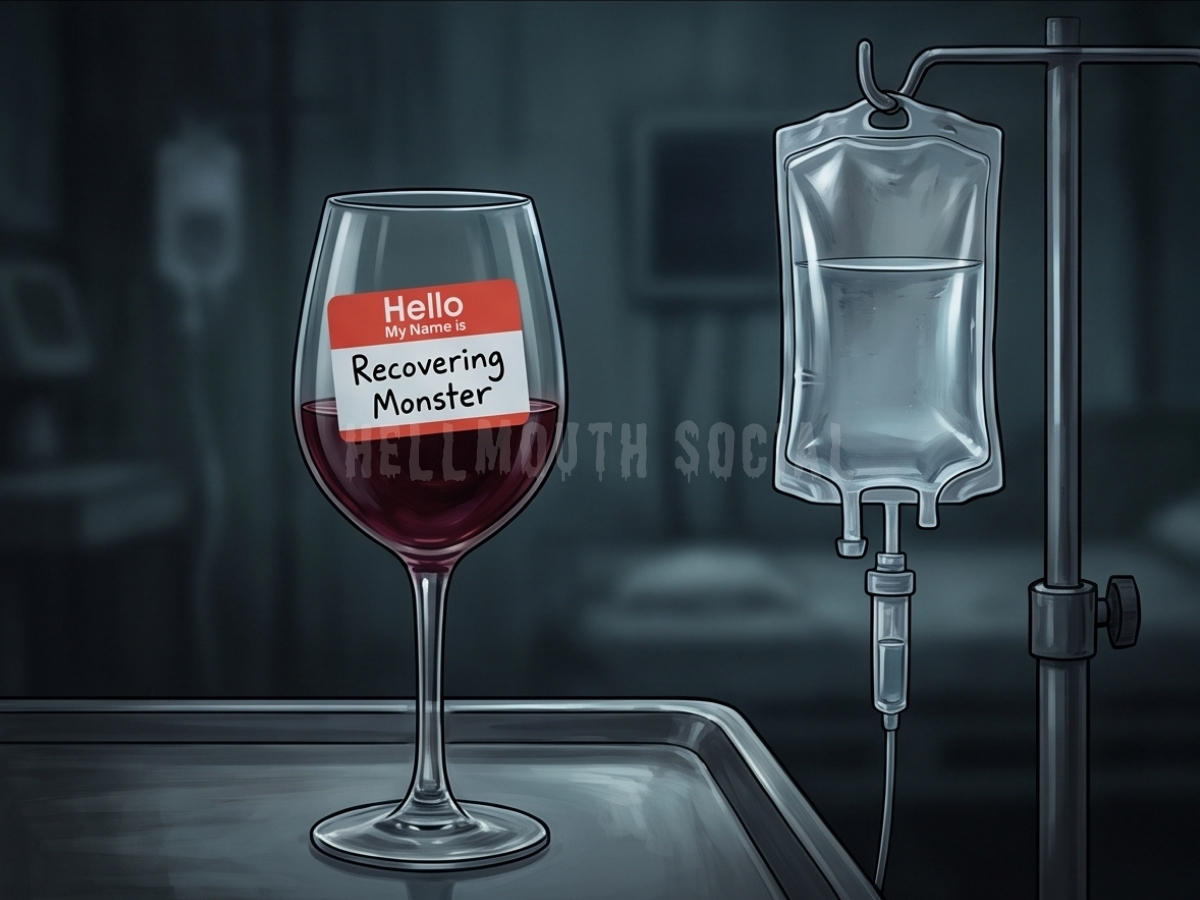
Nick’s obsession with "becoming mortal" is the ultimate Xennial mid-life crisis. We don’t buy Ferraris anymore; we buy artisanal sourdough starters and try to return to our roots. We want to feel "grounded" and "authentic" — two words that didn't exist in the 90s vocabulary unless you were talking about coffee grounds or a grunge band.
Nick is chasing an idealized version of humanity that probably never existed, much like we chase a version of financial stability that our parents had, which was fueled by cheap housing and pensions that didn't disappear into a cloud of crypto-smoke.
The Final Verdict: We’re All Just Vampires in Minivans
Ultimately, "Dark Knight: The Second Chapter" isn't really about vampires. It’s about the exhausting effort of trying to be better than your past while navigating a world that refuses to change its "daylight-only" rules.
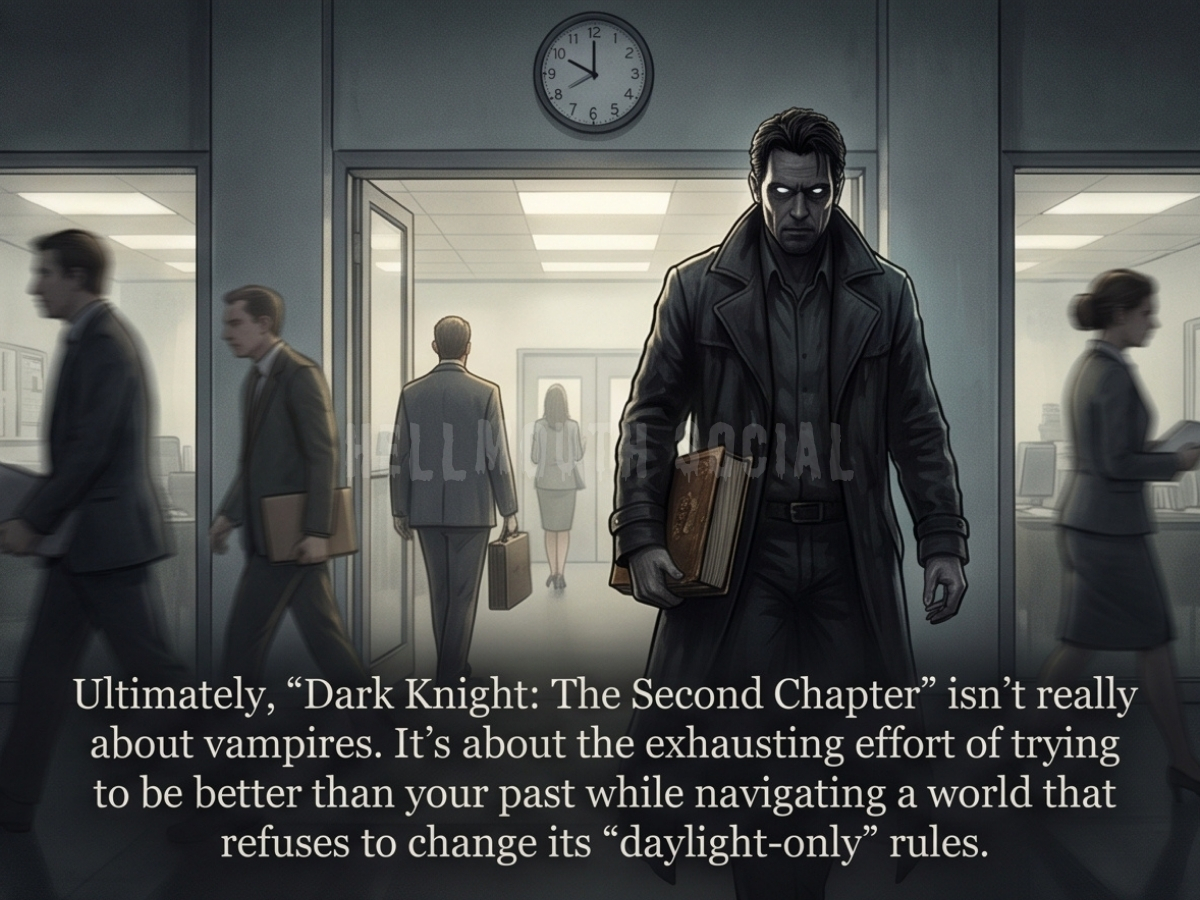
We watch Nick Knight and we don't see a monster; we see a guy who is just tired. He’s tired of the secrets, tired of the night shift, and tired of the same old drama with his "found family". He’s a man who has seen too much history and just wants a decent night’s sleep — or, in his case, a decent day’s sleep in a climate-controlled basement.
As we move deeper into our 40s, we realize that the "Forever" in Forever Knight is more of a threat than it is a promise. But hey, at least we have better skincare routines than he did in 1992. And if we have to live forever, at least we can do it with high-speed internet and the ability to order pizza without leaving our "coffins".
Does anyone else feel like they’ve lived through eight centuries since 2020, or is it just my lower back talking?