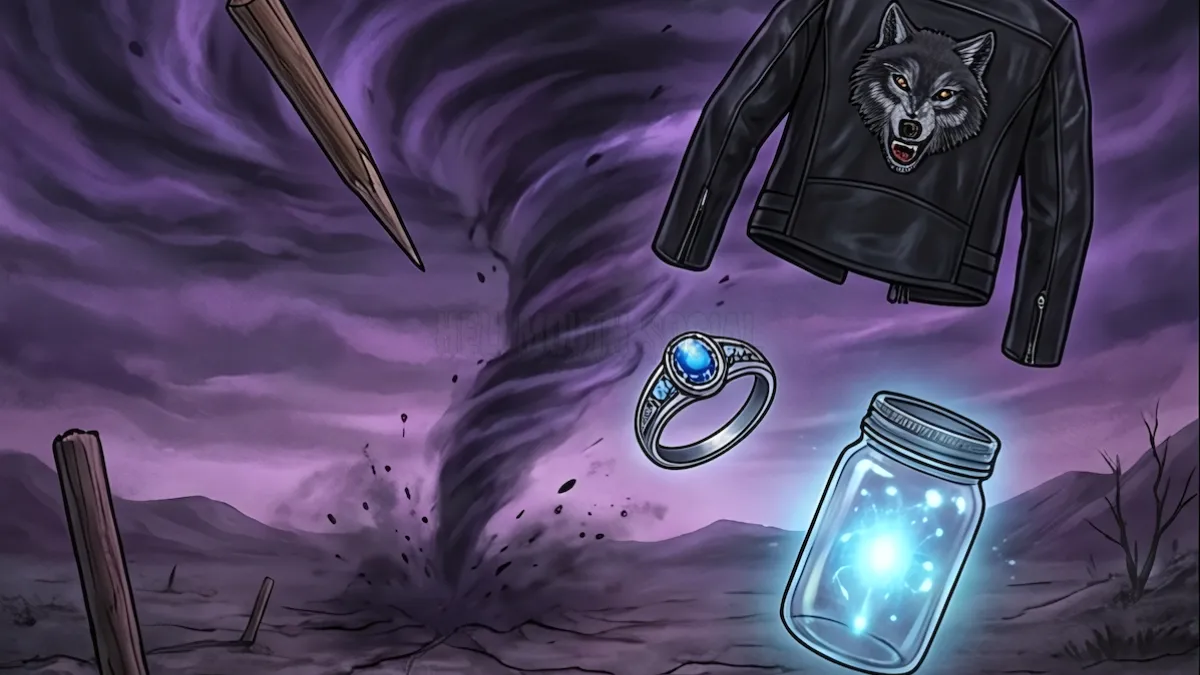
The Xennial Autopsy: Why We’re Still Haunted by the High School Supernatural
Close your eyes and try to catch the scent of 1997. It’s a hazy blend of vanilla-scented body spray, the ozone of a humming cathode-ray tube TV, and the comforting, musty decay of the Sunnydale High library — where the "research" was done in actual books and the stakes were, well, literal.
Now, blink. The saturation drops. The neon windbreakers have been traded for desaturated flannels and the clinical, metallic chill of a Godfrey Institute biotech lab. We’ve moved from the campy, "monsters-of-the-week" charm of our youth into the visceral, skin-shedding grit of modern-day prestige horror. We’ve traded the bright, grainy film of the WB for the hyper-real, bone-snapping gore of a Pennsylvania mill town.
It’s been decades. We’ve traded our flared jeans for mortgages and our butterfly clips for 401ks, yet we’re still obsessed with towns where the local economy is 40% tourism and 60% "unexplained disappearances". It’s time to find out why.
The Xennial Paradox
Welcome to the Bridge Generation. As Xennials, we occupy a strange, haunted middle ground in the digital timeline. We are the last cohort to experience the analog isolation of a "landline-only" adolescence, yet we’re the first to use high-speed fiber optics to perform obsessive, forensic post-mortems on our fictional traumas.
We survived high school without the surveillance of social media, only to spend our adulthoods on social media dissecting exactly why we’re still thinking about a werewolf transformation from 2011 or a vampire’s existential crisis from 1998.
But this isn't just about nostalgia or "shipping" wars. We return to these shows because they were our first maps for navigating Social Anomie — that sociological "normlessness" where the old rules don’t apply and the new ones haven’t been written yet.
High school is the ultimate breeding ground for anomie; it’s a four-year fever dream where the hierarchy is arbitrary and the stakes feel terminal. Whether it was a Sunnydale vampire, a Beacon Hills Alpha, or a Romanichal werewolf in the woods of Hemlock Grove, the monsters were never just monsters. They were placeholders.
They were the physical manifestations of the actual, unadulterated chaos of being a teenager in a world that felt like it was constantly ending. At Hellmouth Social, we’re finally ready to look at the monsters under the bed and realize they were just wearing our varsity jackets.
The Literalization of Puberty (Medical Sociology)
In the world of Medical Sociology, we often discuss the "medicalization of the body" — the way we categorize and monitor our physical selves. But in the supernatural high school genre, this is a total biological hostile takeover.
We see a fascinating spectrum of how these shows handle the "change". On one end, you have the "Glamour Transition" of The Vampire Diaries. For the most part, turning into a vampire involves some heavy breathing, a little blood-lust, and suddenly having better hair and sharper cheekbones. It’s puberty as a glow-up — a fantasy where your biggest physical struggle is remembering to wear your daylight ring.
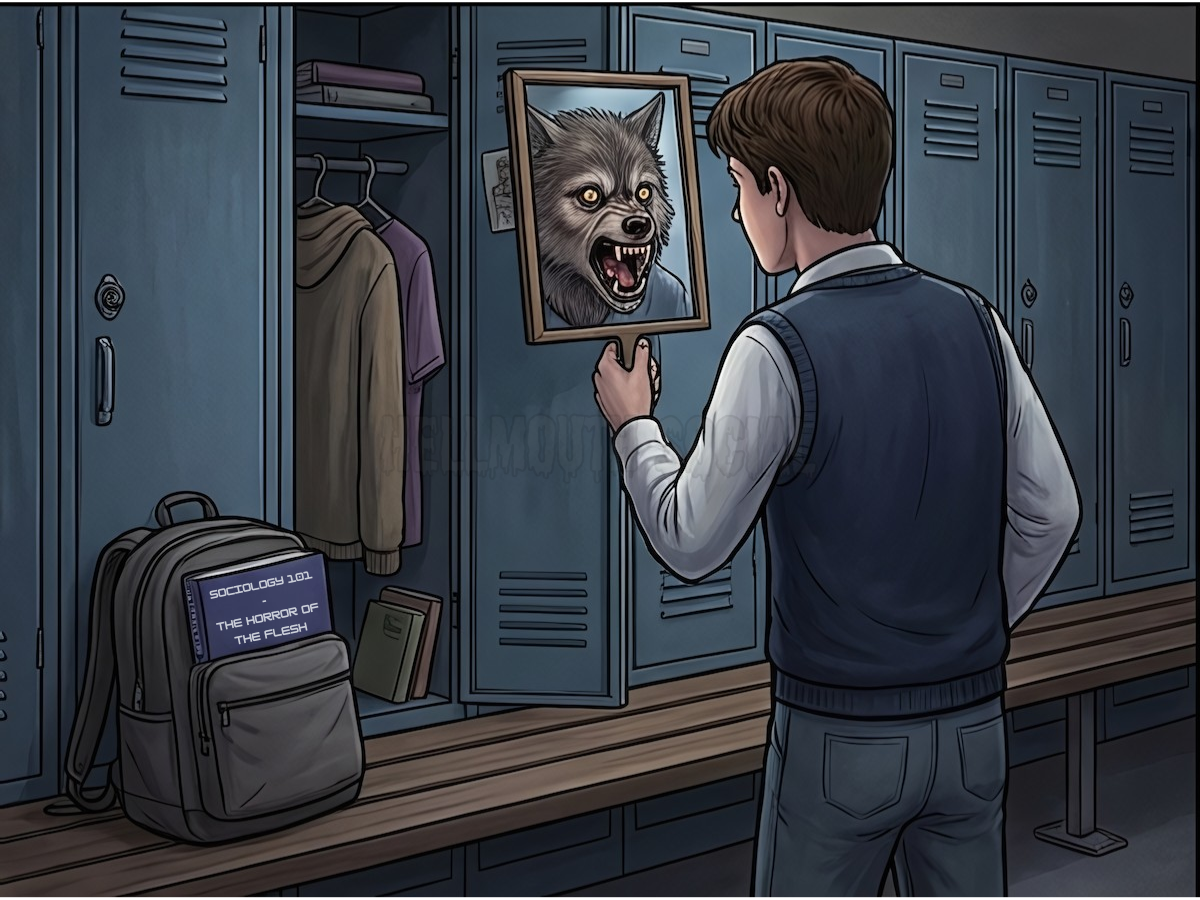
Then, there is the other end of the scale: the absolute, bone-snapping catastrophe of Hemlock Grove and Teen Wolf.
In Hemlock Grove, Peter’s transformation into a werewolf isn't a cinematic montage set to a pop track; it’s a medical emergency. It is a visceral, wet, and agonizing shedding of skin. Eyeballs pop, spines elongate, and the human form is quite literally discarded in favor of something feral. It treats the body not as a temple, but as a cage that is being violently remodeled from the inside out.
Let’s be honest: while most of us didn't literally shed our human hide on the floor of the school gymnasium, the "horror of the flesh" during our teenage years felt exactly that violent. One day you’re a kid, and the next, your voice is betraying you, your skin is erupting in ways that feel like a curse, and your hormones are staging a coup.
We don't just watch these transformations for the special effects; we watch them to validate that deep, lizard-brain memory of having a body we could no longer control. It’s nice to know that even if we felt like monsters, at least we didn't have to eat our own discarded ears.
The "Gated Community" & The Class Divide (Conflict Theory)
From a sociological perspective, these towns aren’t just backdrops—they are Total Institutions. Whether it’s the high school hallway, the shadowy corridors of the Godfrey Institute, or a centuries-old coven, these spaces are designed to regulate behavior and reinforce the status quo. Through the lens of Conflict Theory, we see that the real "Big Bad" isn't always a demon; sometimes, it’s just the staggering weight of generational wealth and systemic gatekeeping.
Consider the "Scooby Gang" of Sunnydale. Theirs was a distinctly middle-class struggle. They operated out of a public library, fought for the safety of a town that barely acknowledged them, and had to balance saving the world with working part-time jobs at the Doublemeat Palace. Their power was grassroots, earned through bruises and overdue book fines.
Contrast that with the extreme, cold-blooded wealth disparity in Hemlock Grove. The Godfreys don’t just live in the town; they own the town. Their influence is baked into the architecture of the Godfrey Institute, a biotech monolith that looms over the blue-collar decay of a struggling Pennsylvania mill town.
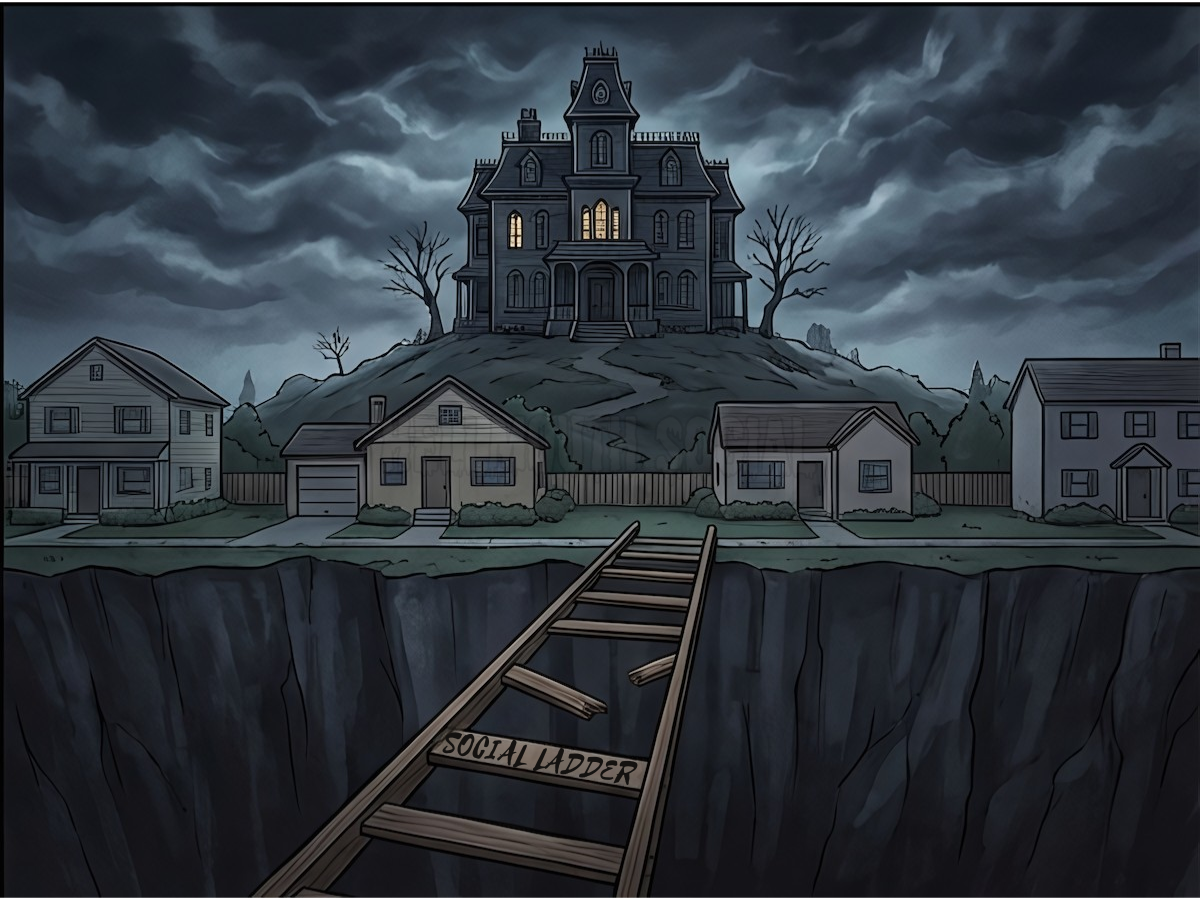
Then you have The Vampire Diaries, where the Salvatore estate serves as a literal monument to "Old Money" and Confederate-era privilege. In Mystic Falls, being "Founding Families" is a license to commit murder with impunity while the working-class townspeople are treated like an all-you-can-eat buffet.
As Xennials, we’re looking back at these shows to decode the privilege we didn't quite have the vocabulary for in 1999. We’re realizing that the mystical protection some characters enjoyed was often just a byproduct of their tax bracket.
We watch these shows now and see the truth: even in a world of magic, the most powerful spell you can cast is usually a trust fund. It turns out that having a silver tongue is much easier when you’re born with a silver spoon — especially if that spoon is also useful for warding off certain supernatural entities.
The "Outsider" vs. The "Alpha"
In the social ecosystem of a supernatural high school, the food chain is remarkably literal. To understand why, we have to look at Max Weber’s theory of Charismatic Authority. Weber argued that certain leaders gain power not through legal rules or ancient tradition, but because their followers believe they possess extraordinary, almost superhuman qualities. In our favorite shows, that "almost" is doing a lot of heavy lifting.
On one side of the coin, you have the Outsider archetype — think Buffy Summers, the girl who burned down her old gym and started over as the weirdo at the library table. She is a reluctant leader, a Chosen One who earns her authority through blood, sweat, and a very high stakes-to-quip ratio.
On the other side, you have the "Princes" and the "Alphas". Enter Roman Godfrey from Hemlock Grove — the billionaire sociopath with an Upir’s appetite — or Scott McCall and Derek Hale from Teen Wolf, who navigate the literal "Pack Mentality". These characters don't just lead; they dominate. They command a gravity that pulls every other social outcast into their orbit.
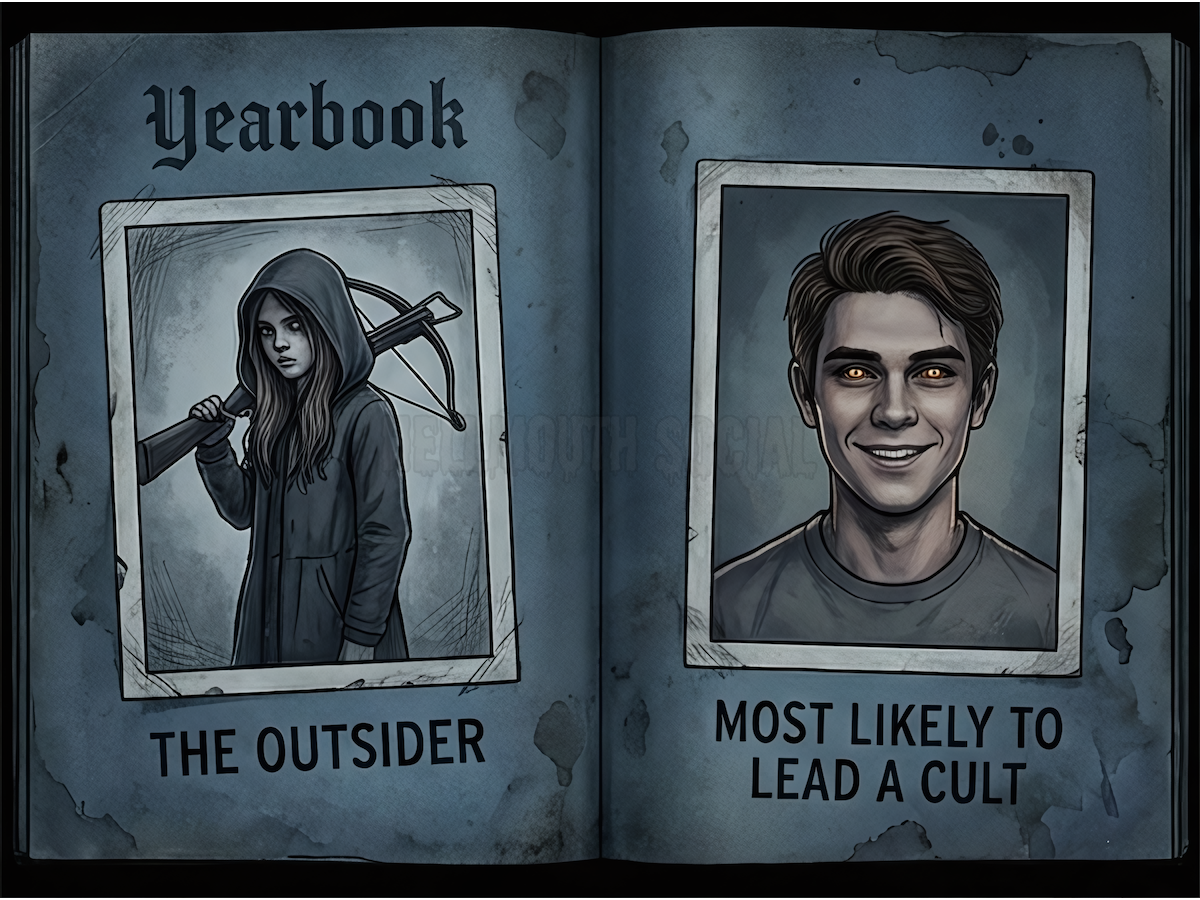
The sociology here is a bit uncomfortable: why do we crave belonging so much that we’d follow a literal monster just to have a seat at the lunch table?
High school, as it turns out, is just a low-stakes cult. You have the charismatic leader, the shared rituals (homecoming, anyone?), and the absolute terror of being "excommunicated" to the table by the trash cans. We watch these shows now and realize that the supernatural "packs" were just a more honest version of our own teenage cliques.
Whether you’re howling at the moon or just wearing pink on Wednesdays, the impulse is the same: survival through proximity to power. It’s a lot easier to ignore the fact that your best friend is a murderous vampire when the alternative is eating your tater tots in total social isolation.
Analog Trauma in a Digital World
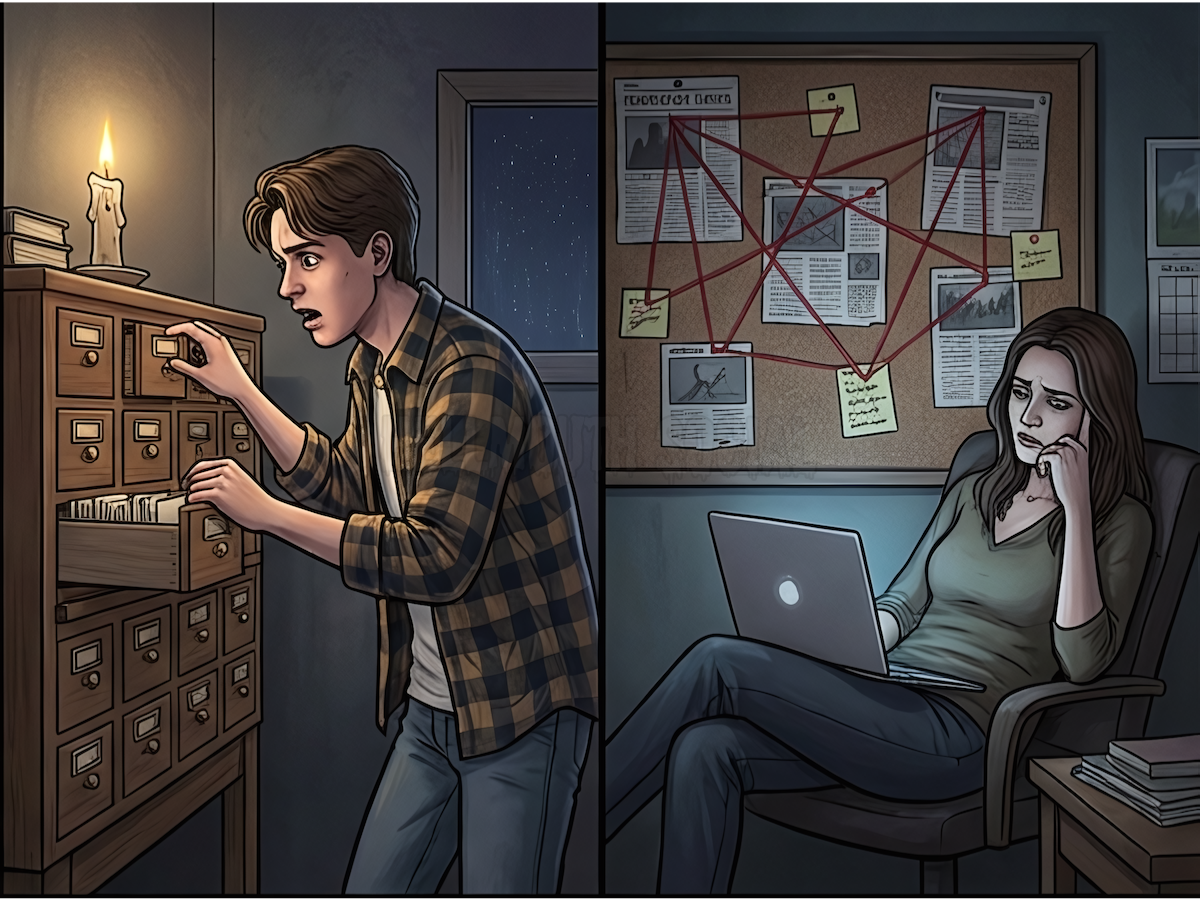
There is a specific brand of anxiety that today’s Gen Z viewers will never truly grasp: the terror of being unreachable. As Xennials, we are the last generation to know the profound, hollow silence of a dead phone booth or the desperation of a Nokia 3310 with zero bars of signal. We are the bridge between two very different types of surveillance: the mystical and the technological.
In the early days of Buffy, horror was analog. It was dusty, leather-bound books, handwritten prophecies, and the frantic search for a landline while a demon breathed down your neck. Information moved at the speed of a card catalog. If you were trapped in the school basement after hours, you were effectively on another planet. That isolation was a character in itself — a geographical cage where help was only as close as the nearest corded phone.
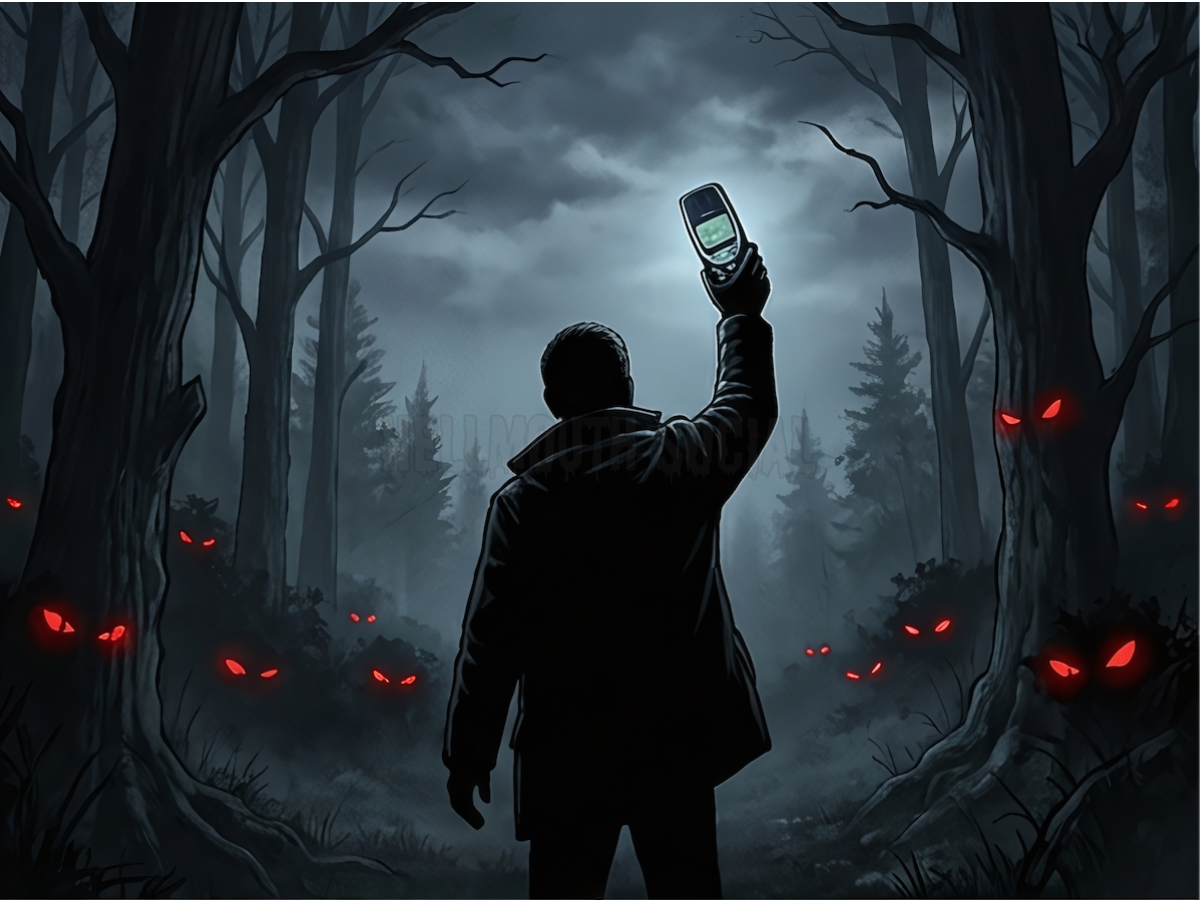
Fast forward to the "Netflix-era" grit of Hemlock Grove, and the horror has been upgraded to a high-speed fiber-optic network. Here, the surveillance isn't a ghost in the machine; it’s the machine itself. The Godfrey Institute represents a shift toward Corporate Biotech Surveillance, where your DNA is a data point and the "monsters" are being tracked via satellite and thermal imaging.
We’re obsessed with these shows because they capture the evolution of our own paranoia. We remember the "Small Town Syndrome" of the 90s, where you could vanish into the woods and truly be gone. But we also live in the present, where we’re constantly "connected" but somehow more vulnerable to the monsters behind the screen.
There’s a dark, nostalgic comfort in watching Buffy or the Teen Wolf pack struggle with a lack of signal; it validates that specific, primal fear of being trapped in a small town where no one can hear you scream — not because they aren't listening, but because your service provider hasn't installed a tower near the local portal to Hell yet.
Conclusion: Class is in Session
At the end of the day, Hellmouth Social isn't just a fan site or a digital scrap-book of things we used to like. Think of it more as a laboratory—a sterile, slightly cold room where we’ve laid out our adolescence on a stainless-steel table to see if the scars still itch when the weather changes.
We aren’t just fans re-watching our favorite scenes; we’re forensic investigators of our own nostalgia, using the tools of modern sociology to figure out why these stories still carry so much weight in our thirty-something brains.
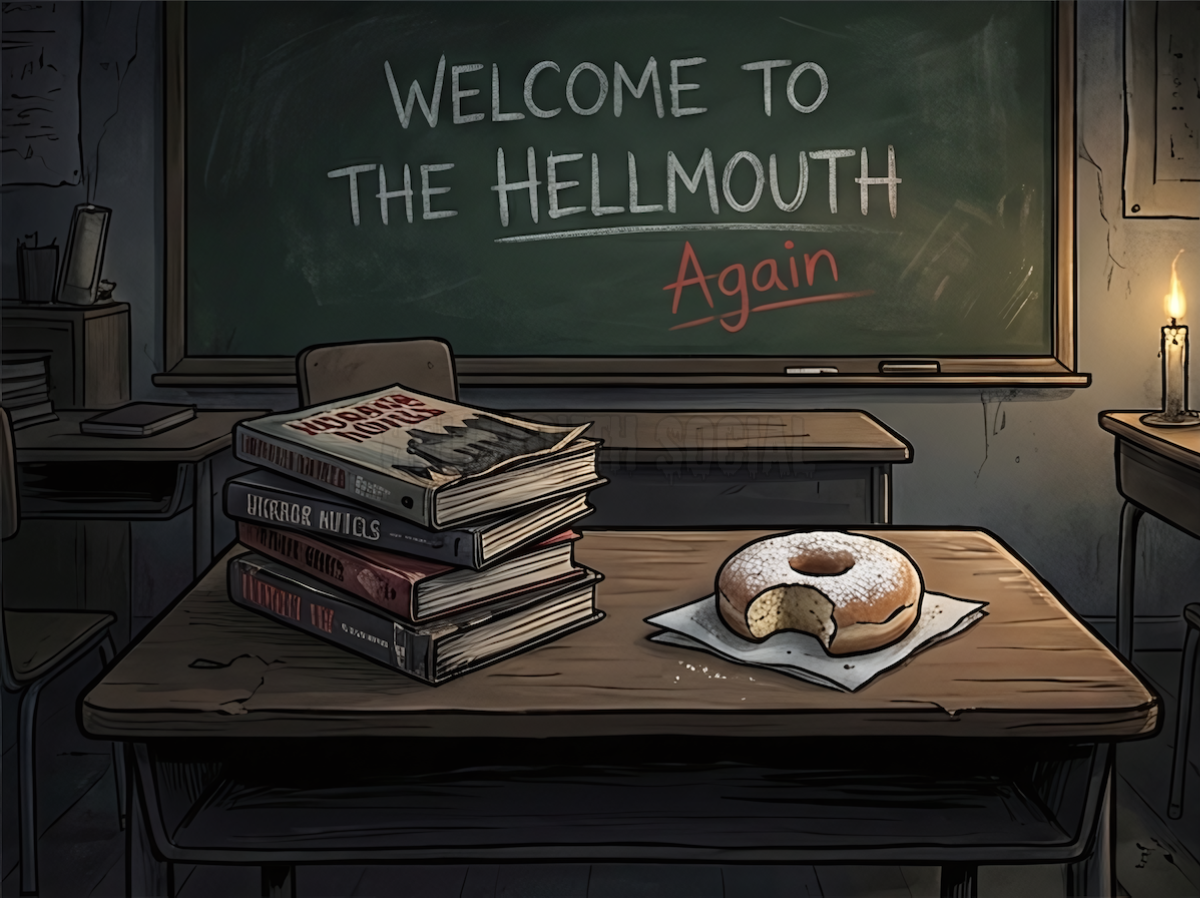
We spent our teenage years jokingly complaining that high school was "hell," but we’re starting this category by looking back at the moment that metaphor died. For a certain petite blonde who walked into Sunnydale High in 1997, "Hell" wasn't a figure of speech or a bad day at the lockers—it was a literal, geographical fact bubbling right beneath the floorboards of the gymnasium.
Next time, we’re going back to the source code. We’re heading to Sunnydale to prove that the library wasn’t just for studying — it was ground zero. Grab your stakes and your overpriced lattes, because as Buffy Summers learned in Episode 1: Hell isn’t a destination you reach after you die; it’s a four-year mandatory sentence with a really bad dress code.
Class is officially in session.