Reclaiming the Hellmouth One Rewatch at a Time
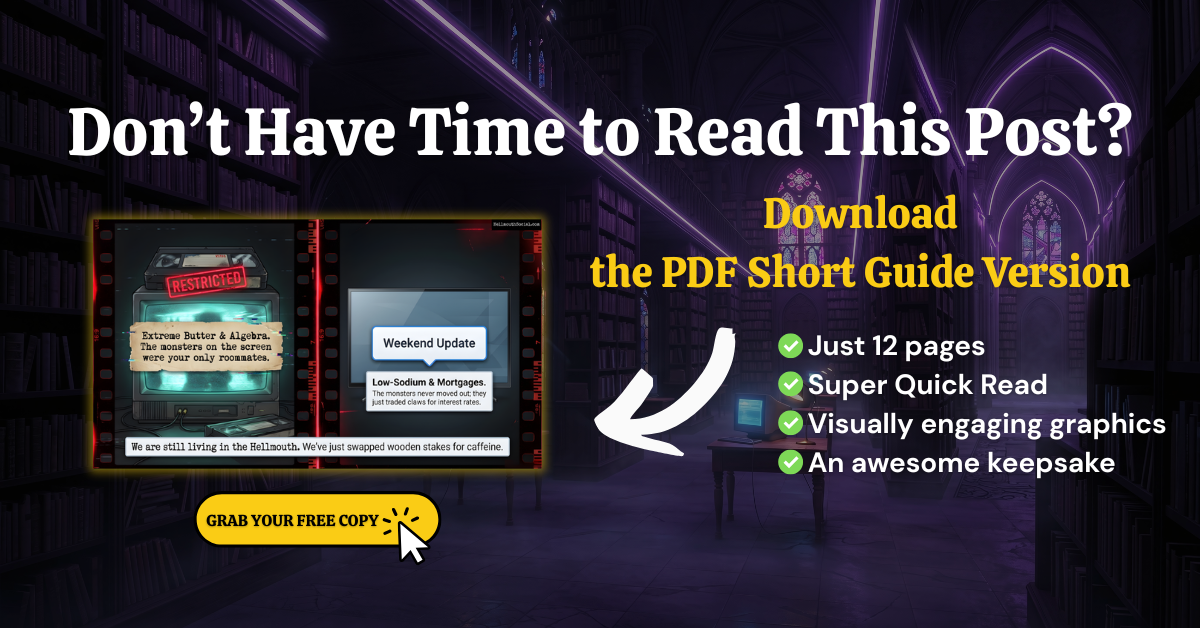
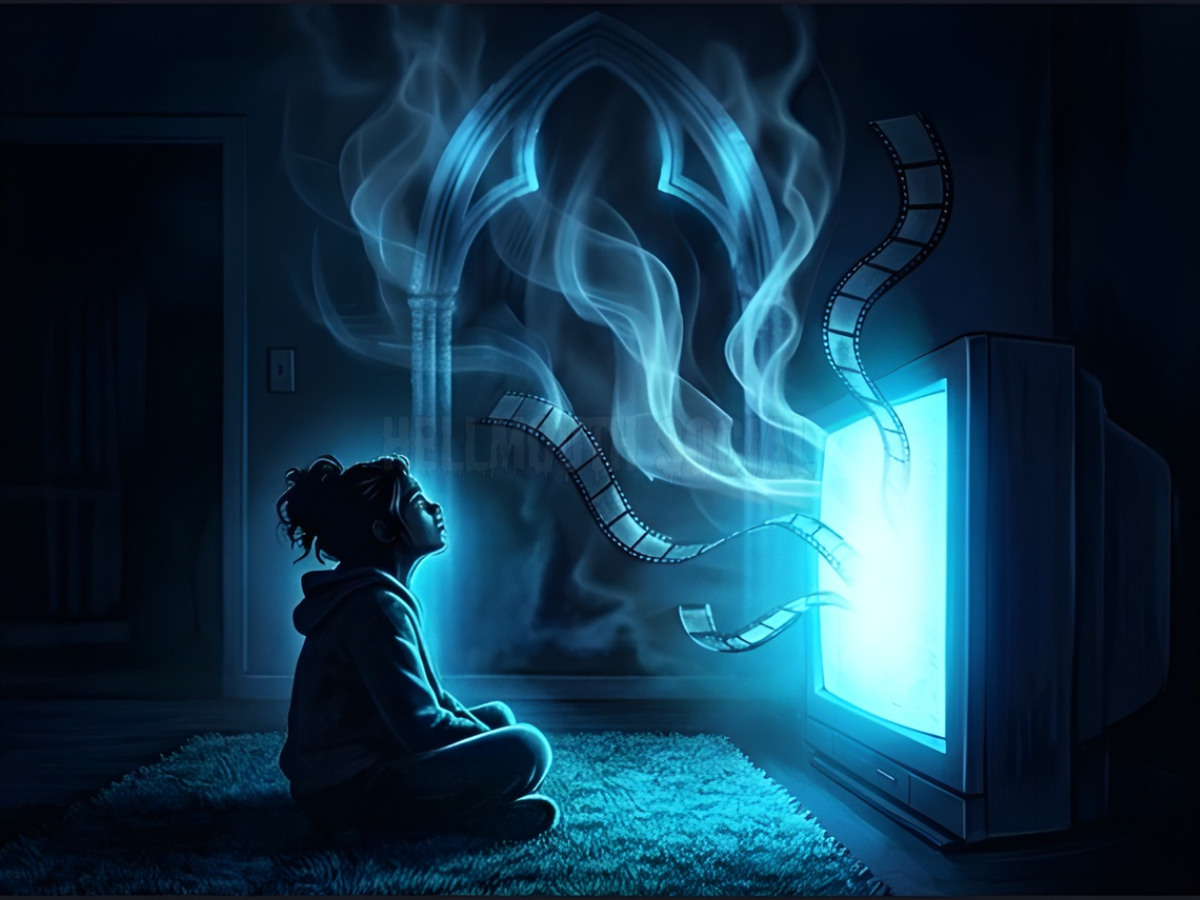
It’s 1996. You’re home alone because your parents are working late — again — and the only thing standing between you and the crushing silence of a suburban Tuesday is a bowl of "Extreme Butter" popcorn and a flickering 20-inch Zenith TV that weighs more than a small car.
You slide a rental tape into the VCR, ignoring the "Restricted" sticker, and hold your breath as the tracking lines stabilize to reveal a gothic title card. For the next two hours, the monsters on the screen are your only roommates, and honestly? They’re way more interesting than the algebra homework you’re ignoring.
Fast forward thirty years. The heavy CRT is now a 4K flat screen, the microwave popcorn has been replaced by a "low-sodium" alternative that tastes like sadness, and that "no-parent" freedom has morphed into "no-time" adulthood. But here’s the thing: those monsters never actually moved out. They just traded their capes and claws for mortgage interest rates and the haunting ping of a weekend email from your boss. We’re still living in the Hellmouth; we’ve just swapped the wooden stakes for caffeine and a cynical sense of humor.
Why We’re Going Back to the Movies
Welcome to the "Back to the Movies" category — a very specific window of time spanning from 1980 to 2016. We call this the Supernatural Goldilocks Zone. It’s that glorious sweet spot where practical effects finally stopped looking like paper-mâché but hadn't yet devolved into the soulless, hyper-polished CGI soup we see today. It was a time when a werewolf transformation looked like it actually hurt, and more importantly, it was a time before every movie monster had a verified TikTok account and a PR crisis.
As Xennials, we occupy the weirdest seat in the theater. We are the "analog childhood, digital adulthood" bridge — the last generation that remembers having to check the physical TV Guide to see when The Howling was on, but who now uses high-speed fiber optics to argue with strangers about vampire lore. We grew up in the shadows of the Cold War and came of age during the birth of the internet, which gave us a very specific brand of guarded optimism (meaning: we’re exhausted, but we have great taste in soundtracks).
This series isn't just a trip down a spooky memory lane; it’s a full-scale sociological audit. We’re going back to the Hellmouth to see how the demons of our youth shaped the cynics we are today. We’re applying modern-day sociology principles to old-school scares to figure out why we’re more afraid of a 1% battery notification than a poltergeist.
Think of it as a pseudo-scholarly deep dive, but with more leather trench coats, better dark humor, and a lot less patience for people who don’t understand why Blade is a cinematic masterpiece. Grab your coffee (and your stakes), because we’ve got some auditing to do.
The Sociological Breakdown: Why the Monsters Still Matter
1. The Monster as the "Other": From Under the Bed to Under the Microscope
When we were kids, the monster under the bed was just a scary guy with bad dental hygiene. We didn't realize we were watching a masterclass in societal anxiety. In the 80s, the "vampire's kiss" was a thinly veiled, terrifying metaphor for the AIDS crisis — a blood-borne fear of intimacy and the wrong crowd. By the time Blade hit in ’98, the monsters lived in urban decay", representing our collective panic about city centers and the people we weren't "supposed" to talk to.
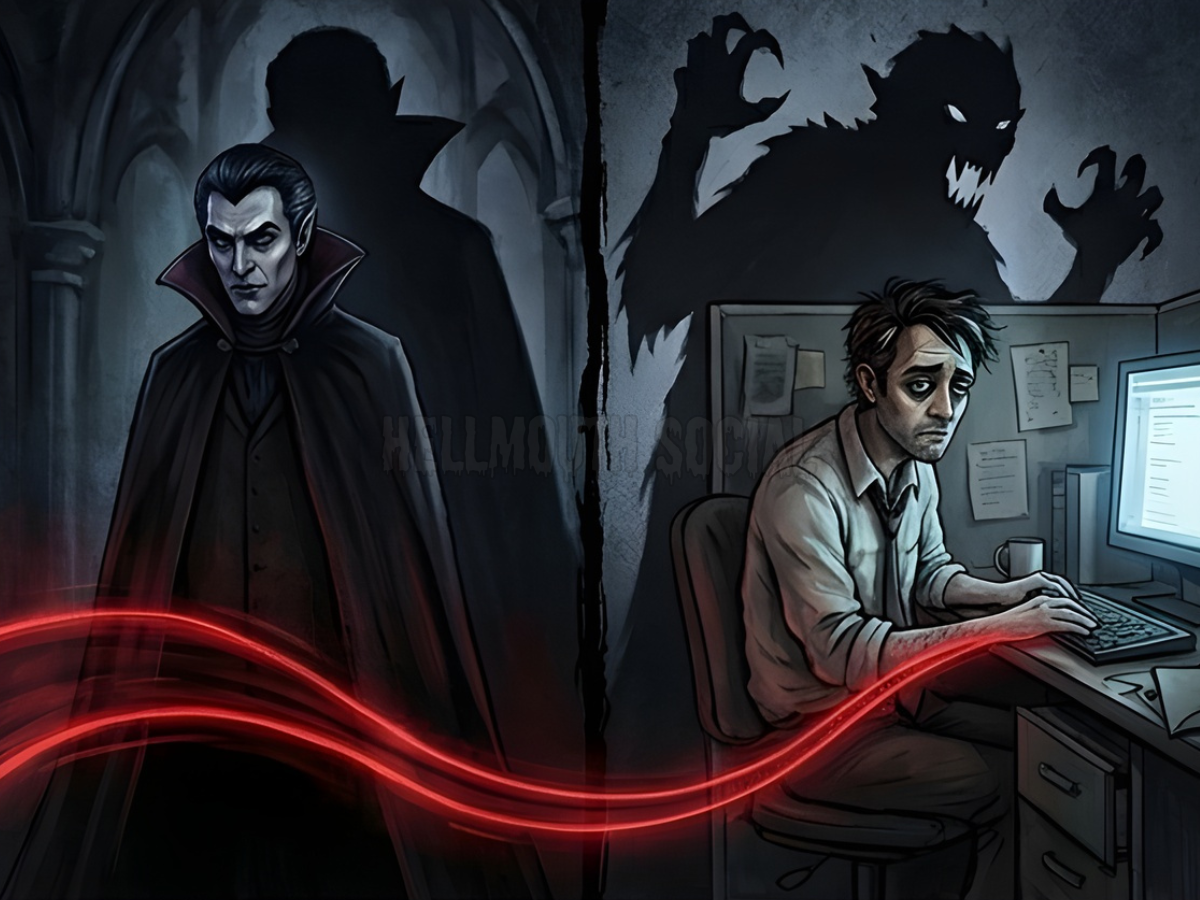
Back then, we cheered for the guy with the stakes. Now? We look at these creatures and think, “Honestly, a misunderstood outcast living in the sewers to avoid taxes? I get it.” We’ve shifted from fearing the "Other" to realizing we’ve been the "Other" all along.
2. Practical Effects: The Sociology of the "Squish"
There is something deeply satisfying about a transformation that involves actual latex, corn syrup, and an actor screaming through six hours of makeup. When David transforms in An American Werewolf in London, you can practically smell the wet fur and hear the bones snapping. It’s visceral. It’s real.
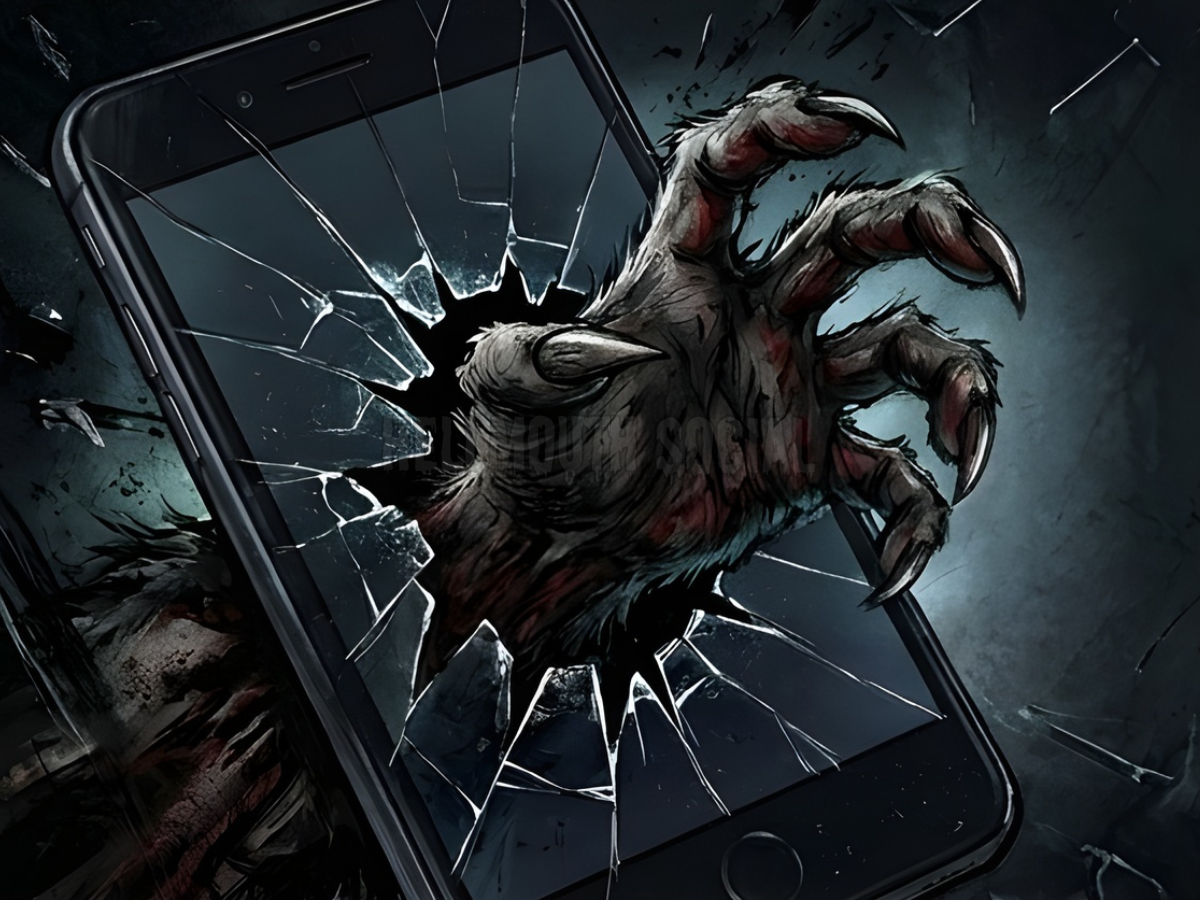
In our modern, Instagram-filtered world where everything is airbrushed and AI-generated, Xennials crave that tactile messiness. We’re the generation that bridges the gap between rotary phones and the Cloud; we know when we’re being lied to by a pixel. We trust a practical effect because it had to physically exist in the room — a rare commodity in an age where even our candid photos are curated by an algorithm.
3. The "Chosen One" to "Cubicle One" Pipeline
We were the target demographic for the "Chosen One" narrative. Whether it was the girls in The Craft invoking Manon or John Constantine chain-smoking his way through a literal war between Heaven and Hell, the message was clear: You are special. You have a dark destiny. The world depends on you.
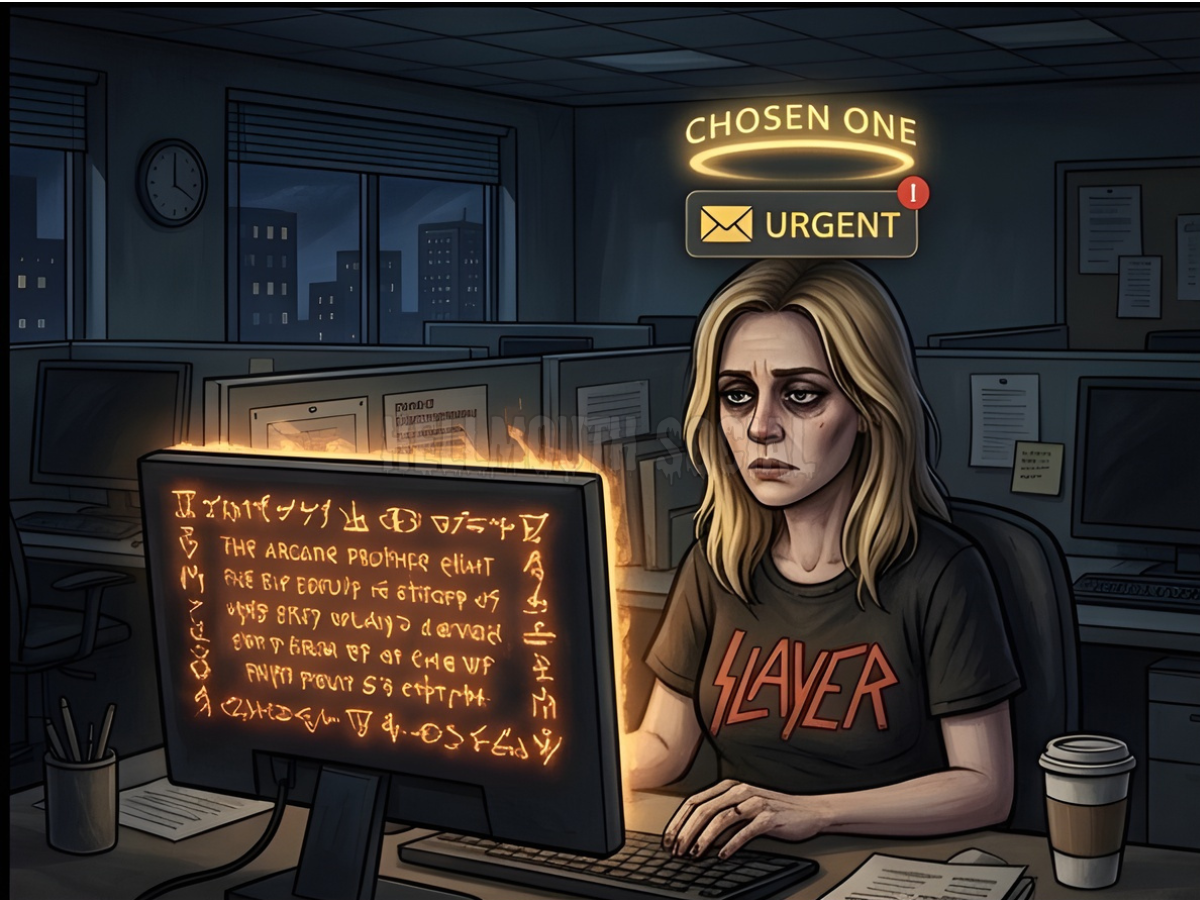
Fast forward to today, and most of us are using that "Chosen One" energy to navigate a passive-aggressive CC chain about the office refrigerator. We were promised a battle for the soul of humanity; we got a 401(k) that’s currently doing a great impression of a ghost — it’s dead and frightening to look at. Our burnout is directly proportional to the gap between our expected supernatural destiny and our actual reality of managing spreadsheets during a slow-motion global apocalypse.
4. Safety in the Supernatural: Better a Demon Than a Deadline
There is a bizarre, dark comfort in watching a poltergeist rip a house apart. Why? Because a poltergeist has rules. There’s an incantation, a ritual, or at the very least, you can just leave the house. You can’t "ritual" your way out of the 24-hour news cycle or a surging cost of living.
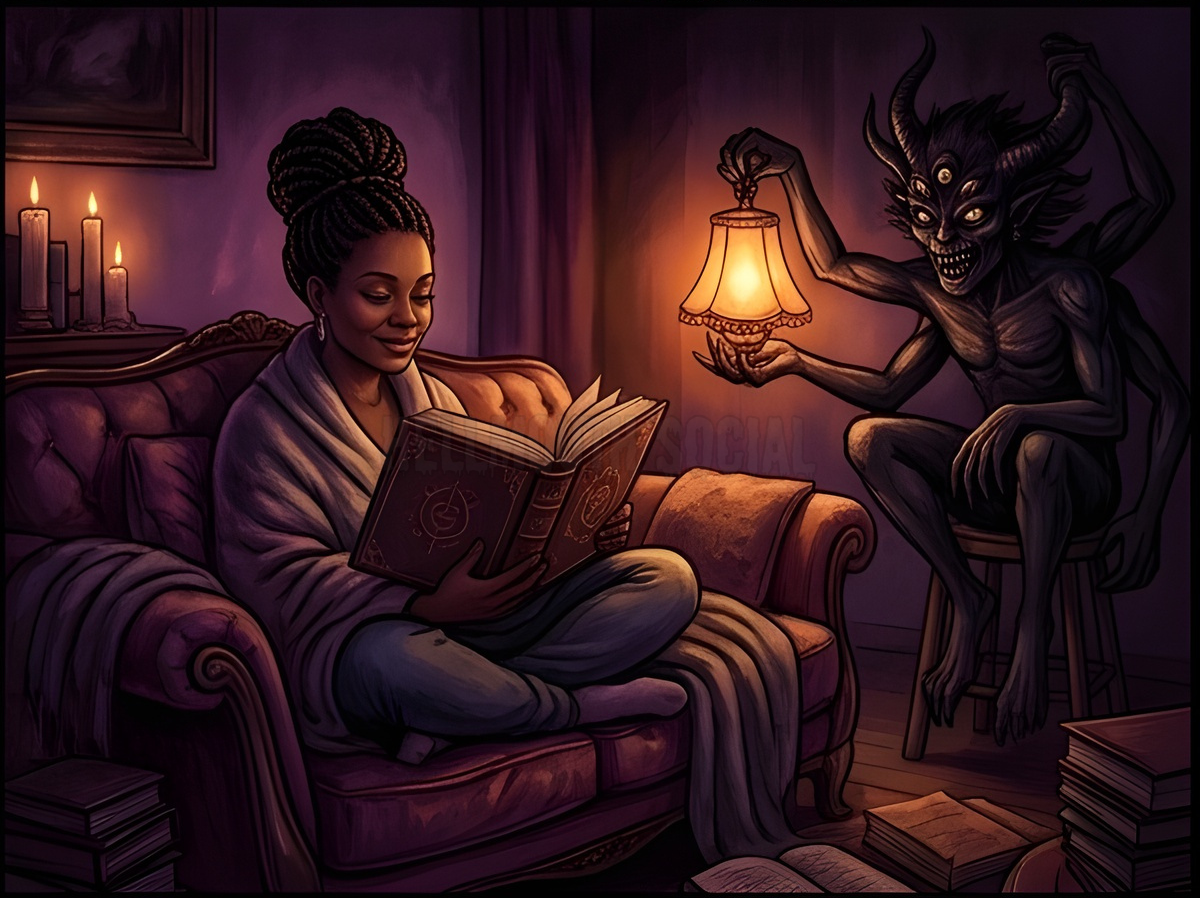
In the 90s, we were afraid of the Blair Witch. In the 2020s, we use supernatural horror as a weighted blanket. At least when a demon possesses your toaster, it’s a problem you can understand. Honestly, I’d rather face a Cenobite offering tears and pleasures than a 7 a.m. Slack notification from a manager asking if I have "five minutes to jump on a quick sync." Pinhead might tear your soul apart, but at least he doesn't expect a follow-up email by EOD.
Conclusion: The Eternal Hunger
Ultimately, reclaiming the Hellmouth isn't just about wallowing in 90s nostalgia or finally admitting that we all had a confusing crush on a leather-clad vampire. It’s about realizing that our spooky interests were actually a form of early-childhood basic training. While the world told us we were just watching "trashy horror movies", we were actually learning how to navigate a world that is complex, often dark, and occasionally governed by people who act like they’ve had their souls sucked out by a Dementor.
We’ve spent decades studying the shadows, and that makes us uniquely qualified to handle the modern world’s brand of chaos. We know how to spot a red flag, we know that the person claiming to have all the answers is usually the first one to get eaten, and we know that a little bit of dark humor is the only way to survive the night — or a three-hour Zoom call.
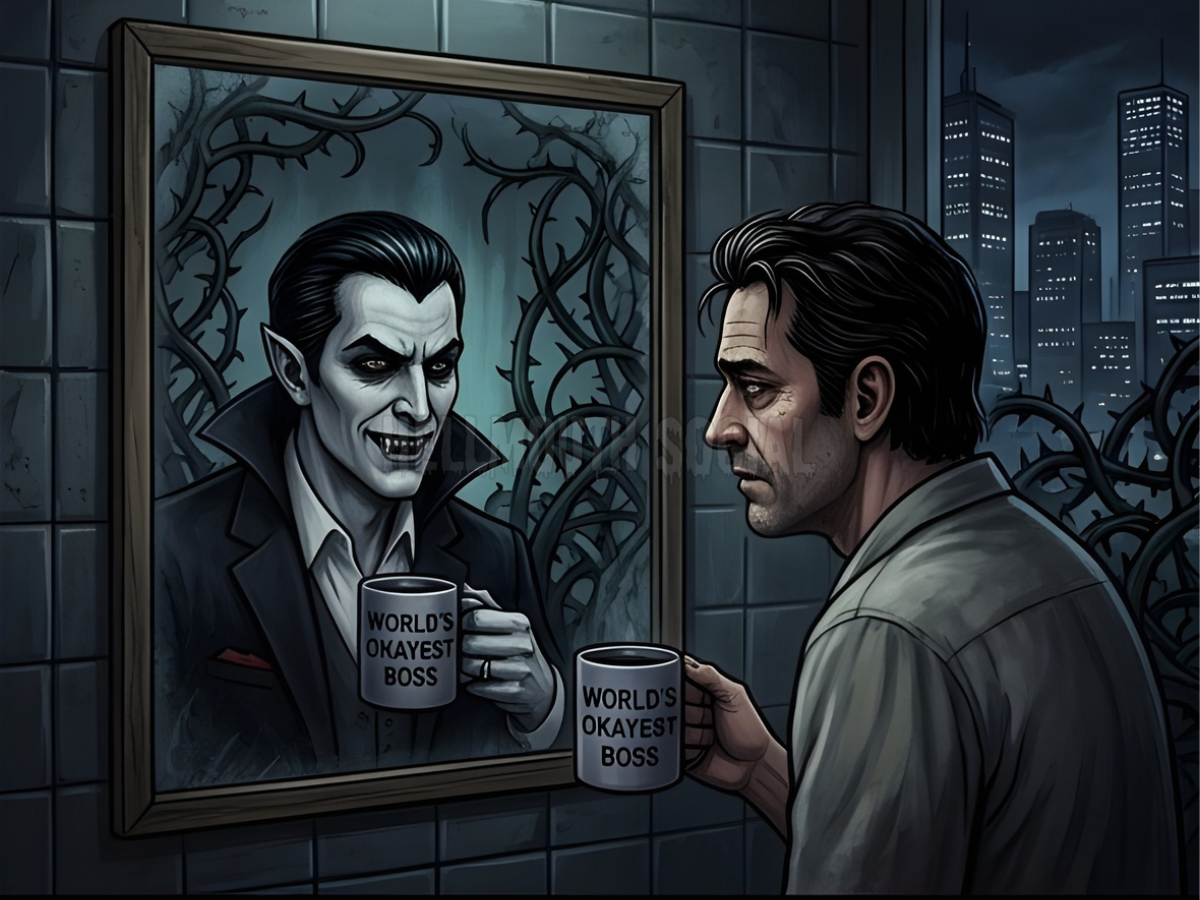
So, as we dive back into these films, I have to wonder: Do we ever truly outgrow the monsters of our youth? Or do we just reach a point in adulthood where we look at the creature lurking in the dark and think, "I get it, man. I'm tired and cranky too." Maybe the real horror isn't being hunted by the supernatural, but realizing you’ve started to sympathize with the vampire.
Coming Soon: We’re heading back to 1994 to discuss why Louis de Pointe du Lac was the ultimate blueprint for the Xennial mid-life crisis. So, get your ruffles ready because we’re looking at why those 18th-century neckbites feel suspiciously like 21st-century burnout.